Technology Assessment & Dissemination Unit
The Extension, Communication & Training unit is carrying out the activities to organize Beej Pakhwara, Sarson Vigyan Mela, Exhibitions, Kisangosthies and trainings. The unit is providing visitors advisory services and technology transfer programme through AIR, TV and through newspapers
Objectives
- To carry out basic and applied research in the areas of extension which will generate knowledge and information to accelerate the rapeseed-mustard crop production system
- To carry out training programmes to impart knowledge, skills of the extension persons engaged in rapeseed-mustard research and transfer of technology so as to improve their efficiency and effectiveness..
- To organize Beej Pakhwara, Sarson Vigyan Mela, Exhibitions, Kisangosthies and Trainings for farmers on important emerging issues related to rapeseed-mustard.
- To conduct FLDs for newly developed technologies
- To render expertise support to extension activities of the centre.
- To provide advisory and consultancy services in the area of rapeseed-mustard production
Future Thrust Areas
- Assessment, refinement of different technology transfer programmes in rapeseed-mustard production
- Knowledge rich TOT programme application of technology with ITK
- Development of training modules for farmers/ extensional personnel engaged in rapeseed-mustard production system
- Develop the strategy for efficient use of electronic and mass media in transfer of technology
Projects
Institute Projects
- Study the adoption pattern and farmers' perception of technological advances. PI: Dr. A. K. Sharma
- Participatory extension for dissemination of rapeseed-mustard technology PI: A. K. Sharma
- Assessment of technology, risk and returns in rapeseed-mustard cultivation. PI: Dr. Lijo Thomas
Achievements
- The unit has forged constructive and fruitful linkages with several institutions In its endeavour to bring the scientific technologies to the farmers. These linkages have lent wider reach and effectiveness to the transfer of technology programmes.
- Adoption practice of 12 major cultivation practices across the major rapeseed-mustard growing regions of Rajasthan, Haryana and Uttar Pradesh were quantified based on an adoption index which indicated low adoption of seed treatment, pest management and soil treatment with mean percentile scores of 23.2, 16.3, and 5.4 respectively. The study also identified 5 economic, 8 infrastructural, 4 agro-climatic and 5 technological constraints affecting the adoption of mustard technology.
- A study of 5 districts of Bharatpur division was done to identify the pattern of adoption and reasons of non-adoption of technology based on key informant responses. The lack of knowledge and conviction, lack of soil moisture, reduction in soil fertility, problem of saline water, non-availability of fertilizers etc. were the reasons for gap in adoption of fertilizer recommendation.
- Since the turn of this century, the unit has conducted more than 350 Frontline demonstrations More than 10,000 farmers have benefitted from scientist-farmer interaction meetings through kisan ghostis, sarson farm school, farmer Interest groups, and village meetings.
- The visitor advisory services have benefitted more than 50,000 farmers. The unit has organized more than 75 training programmes for the benefit of scientist, extension personnel, farmers and line department officials. More than 600 sponsored radio programmes and 50 TV stories have been broadcasted and 200 tribal farmers have received training in rapeseed-mustard production technology.
- Participatory varietal selection and evaluation (PSVE) done at the directorate with 45 farmers of 3 villages in Bharatpur. Farmers evaluated 13 Indian mustard varieties for seed yield and other characters. On the basis of scoring, NRCDR-02, NRCHB-101, RB-50, NRCHB-506 and Geeta were most preferred by the participating farmers.
- The efforts of the unit has transformed Unchagaon village of Bharatpur district in Rajasthan, which was adopted by DRMR, through its catalytic role in bringing together various government agencies and other stakeholders together to address critical developmental challenges in the village and through intensive extension efforts to popularize of improved rapeseed-mustard production technology. The mustard productivity in the village increased by nearly 40 per cent due to the technology intervention efforts
Manpower

|

|
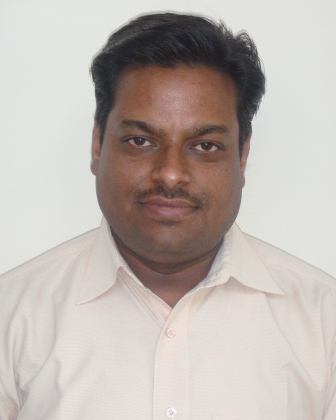
|
Dr. A.K.Sharma,
Sr. Scientist (Ag. Extension)
|
Dr. Lijo Thomas,
Scientist SS (Ag. Economics)
|
Sh.Rakesh Goyal,
Technical Assistant (Photo graphy)
|


