Crop Protection Unit
Crop Protection Unit continued the research work on integrated management of insect pest and diseases in rapeseed-mustad
Objectives
- Monitoring of rapeseed-mustard insect pests and bio-control agents.
- To identify critical bio-ecological factors for the development of major insect pests.
- To develop bio control based integrated pest management for mustard aphid and other insect pest
- To identify the source of resistance in rapeseed-mustard using biochemical base
- Pesticide residue studies in Rapeseed-mustard
Future Thrust Areas
- Screening of germplasm for resistance to insect pest.
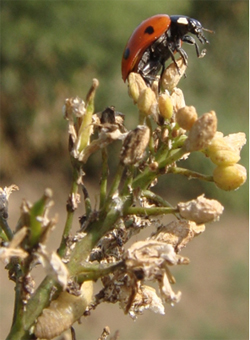
- Rearing of Bio-agent Viz. Coccinella septempunctata and standardization of artificial diet for Coccinella septempunctata
- Rearing and maintenance of host insect Corcyra cephalonica and predator Chrysoperla carnea
- Developing bio-control based IPM for mustard aphid
Projects
Institute Projects
- Epidemiology and management of white rust. PI: Dr.P.K.Rai
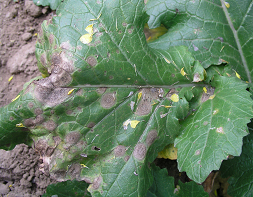
- Management of Alternaria Blight in Rapeseed-Mustard. PI: Dr. P. D. Meena
- Management of Sclerotinia rot in Rapeseed-Mustard. PI: Dr. Pankaj Sharma
- Biological control of major pests of Brassicas with special reference to mustard aphid. PI:
- Pest-plant interaction of major pests of Brassicas. PI:
External Projects
- ICAR-NPTC: Brassica functional genomics for Alternaria blight and drought/ heat tolerance
Achievements
- Significant cultural and molecular variability was observed among the geographical isolates of Sclerotinia sclerotiorum (25) and Alternaria brassicae (25)
- Seed treatment (5g/kg) with talc based formulation of GR isolate of Trichoderma harzianum reduced Sclerotinia and Alternaria diseases up to 30% in Indian mustard.
- Seed treatment with carbandazim (2g/kg) and foliar spray (0.1%) at 60-70 DAS provided maximum reduction in Sclerotinia rot.
- Allium sativum bulb extract (1%, w/v) found effective against Alternaria blight and Sclerotinia rot
- Genotypes Bio-YSR, EC-399296, EC 399299, NPJ-127, NRCDR-515, JM-1, EC-399313, JMY-11 were found resistant to white rust.
- New fungal pathogen Nigrospora oryzae was reported to cause stem blight disease in Indian mustard
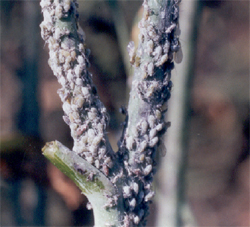
- Mustard aphid reduced seed yield and oil content up to 86.1% and 3.6%, respectively in B. juncea. The corresponding losses were up to 92.1% and 4.6% in B. napus.
- Total phenol, protein, surface wax, glucosinolates, proline and lectins negatively and total sugars were positively correlated with mustard aphid infestation.
- Neem oil (2%) and neem seed kernel extract (5%) reduced mustard aphid infestation by 80%.
- Verticillium lecanii @ 108 CS/ml reduced aphid population by 80% under humid conditions.
- Spray of dimethoate @ 0.1% and release of Coccinella septempunctata @ 5000 beetles/ha 10 days after release reduced mustard aphid population more than 90%.
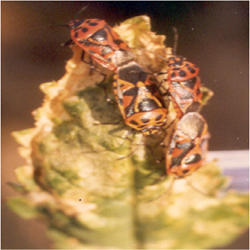
- Seed treatment with imidacloprid 70 WS (5g/kg) provided good control to painted bug up to 30-35 days after sowing.
- Two new insect pests i.e. Gonocephalum sp. (Coleoptera: Tenebrionidae) and Tanymecus indicus Fst. (Coleoptera: Curculionidae) were recorded during seedling stage.
Manpower

|

|

|
|
|
Dr. P.K. Rai,
Pr. Scientist (Plant Pathology)
|
Dr. P.D.Meena
Pr. Scientist (Plant Pathology)
|

|

|

|
Dr. Pankaj Sharma,
Pr. Scientist(Plant Pathology)
|
Mr. U. S. Rana,
Chef Tech Officer
|
Mr. Ram Singh,
Sr. Technical Assistant
|