Crop Production Unit
The unit pursuing research programme on different aspect of rapeseed-mustard production technologies and developing package of practices for rapeseed-mustard cultivation
Objectives
- To develop cost effective Agro-techniques to enhanced input use efficiency and sustain soil health.
- Development of modules for organic cultivation of rapeseed-mustard in relation to plant nutrients applicable under different Agro-ecological zones
- To determine the nutrient requirement of mustard based cropping systems.
- To study the nitrogen economy through introduction of legume crops in mustard based cropping systems.
- To study the production potential and economics of mustard based cropping systems.
- To study the impact of mustard based cropping systems on management / control of diseases and insect pests of rapeseed-mustard.
Future Thrust Areas
- New crop geometry to optimize plant population in late sown conditions
- Sustainable and eco-friendly cultivation of mustard through organic farming
- Orobanche management through different herbicides and cropping systems
Projects
Institute Projects
- Diagnosis of nutrient deficiencies in Indian mustard through visual symptoms and plant analysis.PI:
- Use of organics in Rapeseed- mustard production PI: Dr. O. P. Premi
- Evaluation and Standardization of RCT's for mustard based cropping systems under semi-arid conditions of Rajasthan PI:
- Characterization and classification of soil-site conditions to delineate rapeseed-mustard production zones PI:
- Long term fertility experiment to study changes in soil quality, mustard productivity and sustainability. PI:
- Efficient water management in Brassica juncea. PI:
Achievements
- Adoption of reduce tillage practices (3-4 plough/harrow) improves soil health without any loss in mustard seed yield in comparison to conventional tillage (6-10 plough/harrow).
- Furrow irrigated raised bed (FIRB) system improve the mustard seed yield by 10% and saves 33% water over conventional practices.
- Seed dressing with nitrogen fixing bacteria Azotobacter saves up to 30 kg N/ha and increases mustard seed yield up to 21%.
- Seed dressing with phosphorus solubilizing bacteria (PSB) enhance phosphorus use efficiency from 5.2 to 19.8 kg seeds/kg P2O5 applied and increases mustard seed yield up to 37% over application of phosphorus only.
- Basal application of 40 kg S/ha through gypsum or elemental sulphur to mustard crop enhances its seed oil content up to 2% and seed yield up to 25%.
- Basal application of 5 kg Zn/ha to mustard crop enhance siliqua/plant, nitrogen use efficiency and thereby seed yield up to 12%.
- Application of boron improves siliqua and seed formation in mustard. Basal application of 1 kg B/ha or 2 foliar spray of 0.25% boric acid at 40 and 60 days after sowing increases mustard seed yield up to 21%.
- Application of 2.5 t/ha vermicompost or FYM + 75% recommended fertility level gives 5-10% higher seed yield over recommended fertilizer (80:40:0 kg/ha).
- Incorporation of 2.5 t/ha mustard residue followed by Sesbania green manuring during kharif enhance mustard seed yield up to 50% over fallow-mustard sequence and improves stable soil organic carbons, infiltration rate, water holding capacity, nutrient retention capacity and soil porosity.
- Integrated application of 2.5t vermicompost or FYM + 80 kg N + 40 kg P2O5 + 40 kg S + 5 kg Zn + 1 kg B per hectare improves the mustard seed yield by more than 10% over recommended fertilizer (80:40:0 kg/ha).
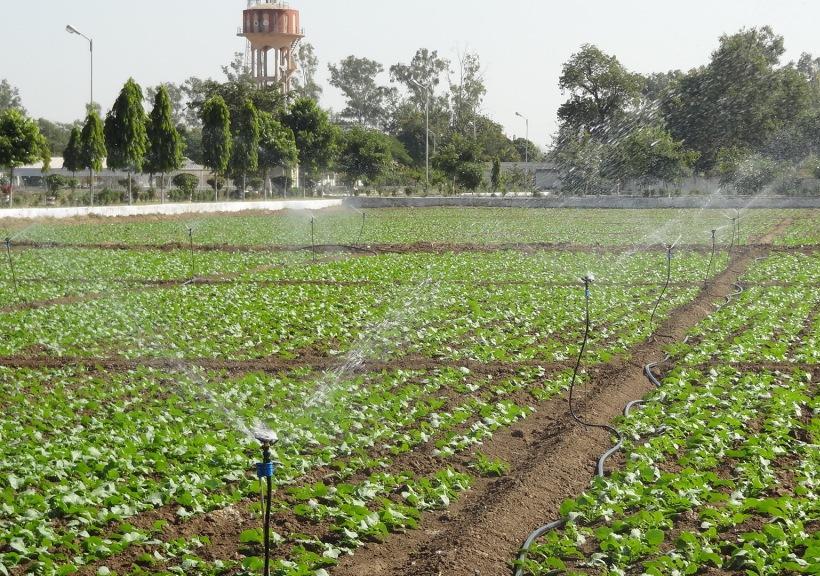
- Use of sprinkler and drip irrigation system improves seed yield of mustard by 25-30% over check basin. It also reduces total requirement of irrigation water by 50% and nitrogen fertilizer by 25%.
- Two hand weedings at 25 and 50 days increases the seed yield by more than 12% over weedy fields. Application of 1.0 kg a.i./ha pendimethalin 30 EC (PE) or 0.06 kg a.i./ha clodinofop 15 WP (at 25-30 DAS) is recommended to controls many annual grasses and some broad leaved weeds in mustard field.
- Adoption of cluster bean-mustard, pearl millet-mustard or Sesbania green manure-mustard sequence improves the total system productivity up to 64% over traditional fallow-mustard practices under protective irrigation.
Manpower

|

|
Dr. O.P.Premi,
Sr. Scientist (Agronomy)
|
|

|
|
Mr. Ramnarayan,
Sr. Tech. Officer
|
|
|